
Water for Coffee
The topic of water for coffee can be quite the rabbit trail to run down. The good news is that understanding water chemistry is not a requirement for actually tasting and experiencing the difference that water can make in coffee. We have an easy tip for testing this yourself at home that we will share with you in a bit.

Early on in my career in coffee, I worked at a shop that took pride in their well water. It made the coffee smooth and balanced, or so they said. I remember a customer who would bring in their gallon water jug just to get it filled. Later, when I went back and tasted the coffee again, I realized that this water caused the coffee to be excessively smooth to the point of lacking acidity and tasting chalky. It tasted lackluster. And this is the reality: depending on where you are, the water can have a significant impact on your coffee.
So what kind of water should we use for coffee? At the very least, it should be odor-free, chlorine-free, and not completely stripped of minerals like distilled water. If you can’t drink your tap water because it tastes like chlorine, sulfur, or iron, know that it is negatively impacting your morning cup.
The Specialty Coffee Association (SCA) as set water standards for optimal coffee brewing with specific mineral content parameters:
-
Total Dissolved Solids: 75-250 ppm (mg/L) with 150 ppm as a target, ensuring enough minerals for extraction without being too chalky.
-
Calcium Hardness: 50-175 ppm (as CaCO₃) provides essential minerals, balancing solubility and preventing scale.
-
Total Alkalinity: Around 40 ppm (as CaCO₃) is often cited, but a range of 40-70 ppm (or even higher for certain coffees) is acceptable to buffer acidity.
-
pH: A neutral range of 6.5–7.5 is recommended, as pH affects how flavors are extracted.
Simplified further, think of having two sliding scales that impact flavor: hardness and alkalinity.
-
Water that is too hard will extract the coffee more easily, but also taste more bitter, harsh, salty.
-
Water that is too soft can be underwhelming with flavor and sweetness.
-
Water with too much alkalinity can be chalky and flat.
-
Water with not enough alkalinity can be sharp and sour.
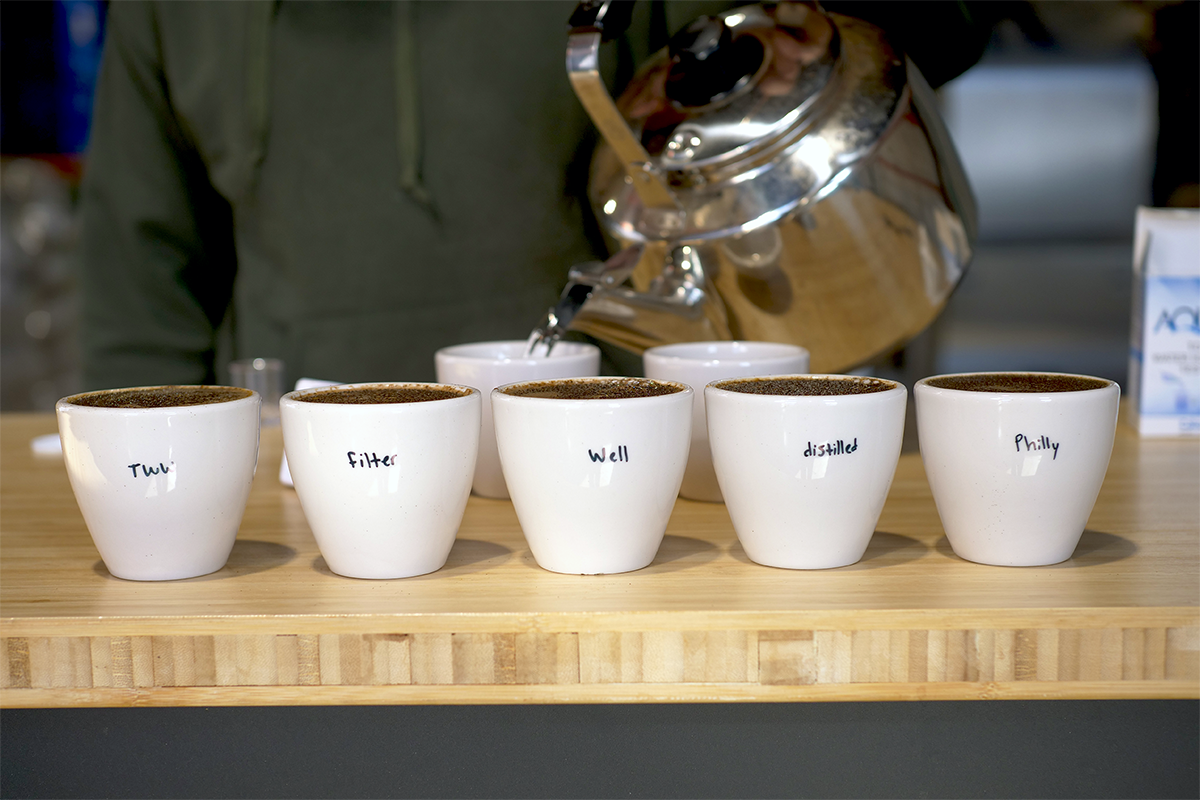
Here in Lansdale our tap water is at a calcium hardness of 90 ppm with a faint chlorine odor, this is fairly soft. We filter it here at our roastery and this does not lower the calcium hardness but it does create clean odorless water. Because of our water makeup, our coffees tend to land on the brighter, more acidic side of the spectrum. We compared this to some odorless well water (179 ppm CaCO₃) and some Philly tap water (215 ppm CaCO₃) with a noticeable chlorine odor. The well water created a coffee with more texture, less acidity, and slightly muddled flavors. The Philly tap water left the coffee tasting a little savory, bitter, and not very clean.

In our test, we did not test the alkalinity. To do so, one could blend up their own waters using different water recipes. If you find yourself doing so, you might be past the rabbit trail and lost deep in the rabbit hole. We wish you the best of luck!
If you want to test your water, there are test strips you can buy or droplet testers, many are advertised for pool and spa use. If you have a Reverse Osmosis (RO) system at home, check to see if it also remineralizes the water. RO strips almost everything out of the water, leaving flat and acidic water. Many RO systems include built-in remineralization cartridges to add back in essential minerals like calcium and magnesium to improve the taste, raise pH, and provide health benefits.

If you want to explore for yourself the impact water can have on coffee we would recommend starting with a gallon of distilled water and a packet of Third Wave Water minerals – medium roast or light roast profile. Use this for some brews at home, and ideally taste some coffee side by side with your tap or filtered water. If you don’t notice much of a difference, then no need to worry. Just keep enjoying your coffee. But if you notice that your home water has an odor, or causes the coffee to taste noticeably different (flat, chalky, bitter, sharp, sour, or salty) then you might want to consider a different water set up for your specialty coffee brews.


Leave a comment
This site is protected by hCaptcha and the hCaptcha Privacy Policy and Terms of Service apply.