


What Terroir Really Means in Coffee: Reflections on Jem Challender’s Terroir
While I absolutely love and appreciate plants, my actual experience growing them is mixed at best. I’ve got at least a dozen houseplants doing pretty well, but then again, I also killed three succulents yesterday. When I need soil for a pot, I grab whatever is nearby—an open bag from four years ago, or the dirt I shake off the latest batch of deceased succulents. I’ve dabbled in vegetable gardening, but I’ve never quite mastered the rhythm: pest control, soil nutrients, watering schedules, spacing, companion planting (basically all the things you need to grow something that thrives).
So when I finished reading Terroir by Jem Challender, it felt like a miracle I’ve kept anything alive at all and suddenly not a mystery why nothing in my care is exactly flourishing. My orchids haven’t reflowered, but hey, the leaves are green. My spider plant’s tips are crispy, but it’s making adorable baby spiders. My red maple hasn’t grown past eight feet in the past twelve years, but the redbud is outgrowing the space I hastily shoved it into.
All of this is my long-winded way of saying: growing plants well is complicated. Growing coffee well? It’s a whole different level.

There are two main species—arabica and robusta—and when we talk about specialty coffee, we’re talking about arabica. (Quick aside: researchers are exploring ways to combine robusta’s hardiness with arabica’s stellar flavor. Some farmers even graft robusta roots with arabica stems. But there is still a lot of work to be done there - if you’re interested, check out the work World Coffee Research is doing!)
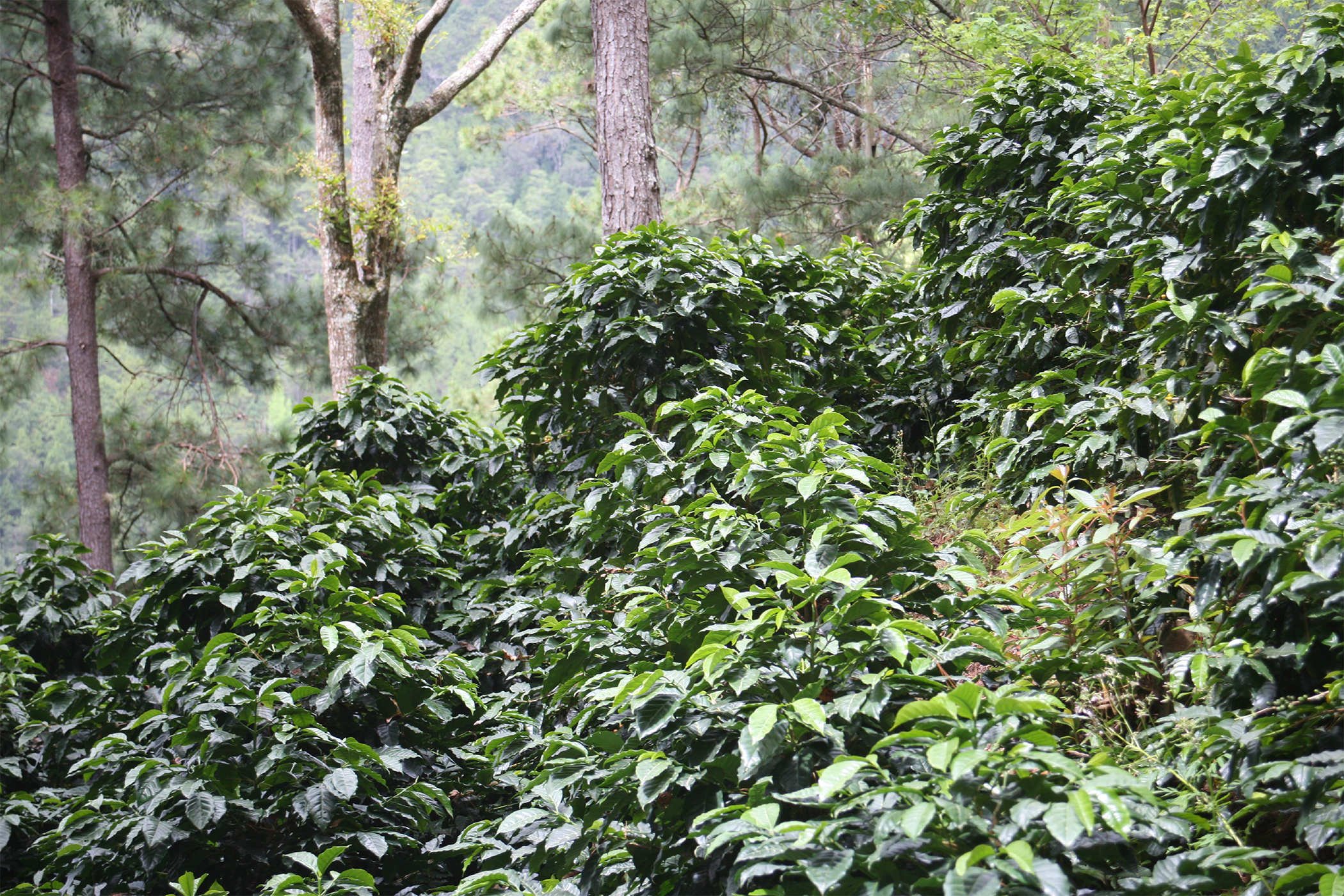
Challender’s Terroir blends academic coffee science with the lived experience of coffee farmers—people whose understanding of plants far exceeds what this book is able to cover. Coffee may have started as a wild plant in Ethiopian forests, but over centuries it’s been nudged, guided, and adapted to grow in different climates, landscapes, soil types, and sunlight conditions all around the world (in the “coffee bean belt” specifically, between the Tropics of Cancer and Capricorn.)
And that’s where we meet “terroir,” defined early on in the book: “The environmental factors of climate and soil, combined with farming techniques, create the specific environment, or terroir, of a farm."
I came into this book thinking I had a decent handle on the factors that shape coffee flavor and quality—variety, processing, altitude, climate. But the book, published by Barista Hustle, goes way deeper. In five chapters, Challender examines everything from the chemistry of photosynthesis to the effects of altitude, slope, and shade on coffee growth. He even brings in interviews with farmers, educators and roasters from around the world, showing firsthand how these factors play out on real farms. Page by page, “terroir” transformed from a tidy concept into something alive and dynamic and, honestly, something that renewed my appreciation of coffee.
Once you start seeing terroir as something living instead of theoretical, you also start noticing how many moving parts shape it. Temperature is shaped by both latitude and altitude. Coffee on one side of a slope gets different sunlight and rainfall than coffee growing just a few hectares away on the opposite side or in the valley. Farmers can intentionally adjust shade, add macronutrients, manage water supply, encourage the right ground cover, or protect against pests, but many interventions are costly, and not all are possible for all farmers. Working within the means available becomes its own strategy, its own stewardship.
And that stewardship is what struck me most. With all that complexity, it’s no surprise that even selecting the right variety, or the right tree to plant beside it, becomes a remarkably intentional decision. Some varieties, like the dwarf cultivar Caturra, are chosen because they grow well on steep slopes where harvesting must be done by hand. Some farmers plant legumes like mucuna as ground cover because they enrich soil biology, prevent erosion and suppress weeds. Choices about harvesting, irrigation, fertilizer, and pruning all set off a chain reaction that shapes yield, quality, and ultimately the flavor in your cup.

When you zoom out and see all these factors at once, it becomes even more incredible that farmers can coax out consistently high-quality coffee at all, let alone the expressive, exciting specialty lots we love. But the book ends on a sobering note: climate change is steadily reducing the land suitable for arabica. The elevations and microclimates that once produced exceptional coffee are shifting, shrinking, or becoming unpredictable. Farmers, already making hundreds of decisions each season, now have to adapt to warmer temperatures, erratic rainfall, and new pests, all while trying to preserve the flavor profiles we cherish. It’s a reminder that terroir isn’t just something to understand, it’s something we need to protect, whether through on-farm adaptation, breeding new cultivars, or even relocating farms upslope to follow the conditions coffee needs. Don’t think you can make a difference? Turns out you can…even though growing coffee has a big footprint, Challender points out that almost half of coffee’s carbon footprint comes from the brewing process at home! Heating water is extremely energy intensive. So yes, making your morning cup efficiently actually helps preserve terroir.
Reading Terroir made me appreciate the people behind each cup in a more human, grounded way. Specialty coffee starts long before it reaches our roastery. It starts with someone walking their fields, noticing the angle of light, the color of the leaves, the feel of the soil after a rain. It made me realize growing great coffee takes care, attention, adaptation, and a whole lot more intention than most of us will ever see.
And if my poor houseplants could talk, they’d probably ask if they could go live on a coffee farm instead.



2 comments
I feel your pain. My husband is the plant guy or they would all be dead and he doesn’t drink coffee he’s a tea man love your coffees
Louise Audinwood
I feel your pain. My husband is the plant guy or they would all be dead and he doesn’t drink coffee he’s a tea man love your coffees
Louise Audinwood
Leave a comment
This site is protected by hCaptcha and the hCaptcha Privacy Policy and Terms of Service apply.