Journey to Shelf Stability

If you’re a longtime Backyard Beans patron, you know we’ve been brewing cold brew for quite a while. Our cans, kegs, and bag-in-box are all crafted in-house by our incredibly hardworking brewing team. Since Matt and the team first started the cold brew project, it’s grown tremendously, but one question keeps coming up: “Can you ship these to us?” Starting now, the answer is finally a resounding YES!
So, why now? What took so long? Do we not care about our customers? (We promise we do!) The truth is, the challenge of shipping cold brew has always been right there in the name: it has to stay cold. From the moment water meets coffee, the brew has to stay below a specific temperature to keep it safe and tasting its best. And when you’re dealing with something that can’t get too hot or too cold (frozen cans are not fun), nationwide shipping just wasn’t in the cards until now.
Luckily, there are ways to package cold brew that make shipping possible. Some options like retort processing are prohibitively expensive, while others require extensive FDA approval, studies, and testing to prove the brew stays safe from start to finish. We also had quality to consider; Our cold brew is the best tasting on the market in part because of the “freshness” factor. We found that traditional methods of shelf preservation made the coffee taste off. So we settled with the harder method. Developing our own process, getting a study done, and getting FDA approval.
Matt has worked hard to reach this stage, and I wanted to take a retrospective view of the journey that led us here. He leaped at the opportunity to talk about it (sarcasm) so I put together a Q&A below; Enjoy!
BREWING HISTORY

When and what made you start brewing cold brew?
We started brewing and selling cold brew by the cup at the Lansdale Farmers Market in 2013. In 2014, we shifted to kegging and serving the coffee on nitro. Moving to cans was the next logical step, which took place in 2017.
What were the initial brewing challenges you faced?
Scale was our challenge for years. We started brewing commercially in 2017 to support our Whole Foods Market cold brew can launch, but were not really in a position to expand until we moved into our current brewery in 2019.
How did you scale up? What were the catalysts?
Growth was the big driver for scaling. From the start until 2023, we brewed using an immersion style brew method. This process takes about a day, and is difficult to scale as larger batches do not save time, they just produce more. In 2023, we shifted from immersion brew to an active brew system. We developed a commercial cold brew system that was capable of brewing 1200 gallons of coffee in one shift. This allowed us to brew more coffee, at a more efficient extraction percentage, in 12+ less hours than a typical immersion brew. Once we dialed in this process, we were able to nearly double our brew capacity.
You seem to know a lot about cold brewing coffee. How did you improve your processes and equipment?
The biggest improvement was the switch to an active brew process. The active brew, think of it as a massive Kyoto style system, provides more control over variables that impact the coffee’s flavor. As a result, we can dial in coffee specific recipes that bring out the best qualities of each brew.
Is it similar to beer brewing?
Similar equipment and cleaning processes, but that is about it.
Have you had any major hiccups/hurdles/mess ups?
Plenty. From bad batches to broken equipment, there were plenty of mistakes made along the way.
It must be a lot to balance all the different sections of business. Were you worried about running a brewery on top of that?
At times, yes. That said, we’ve built a strong team and developed an efficient process for brewing, which makes everything run a lot smoother!
SHELF STABILITY

What is shelf stability?
Shelf stability describes when a food product or similar is able to be kept at room temperature in its sealed packaging without spoilage. Essentially, anything in your pantry is shelf stable since it has gone through a process and packaging to keep it consumable in those conditions.
What are the risks of keeping non-shelf stable cold brew at room temperature? Will I get sick?
Temperature abuse of a non shelf stable cold brew can lead to spoilage or pathogen growth.
Why now? Why didn’t you seek to get shelf stability earlier?
The process to reach shelf stability can take 2+ years. It is something that we have been working on in the background for that long (or longer!)
What was the process to get approval to say you’re shelf stable? Walk me through the big steps
Shelf stability required extensive product testing through a third party lab and thermal processing analysis through a process authority. Our process is not rocket science, but it is proprietary in the sense we are among a small number of companies that have completed the testing needed in order to produce shelf stable cold brew coffee without retorting the product or acidifying it.
Did you consider other options? Retort, copacker, preservatives?
Yes, and they all weren’t as feasible due to cost, lack of control, flavor profile changes and more.
What do you do to the cans to make them shelf stable?
The cans undergo a thermal processing step (pasteurization). Pasteurization along with our formulation control (the testing referenced above) allowed us to get FDA approval for our process.
How do you keep records of all that information?
Every batch that gets brewed has a batch record that all of the important data is recorded in. When canned, we print the Batch ID on the bottom so we can reference these records. When pasteurizing, we use a device that records the internal temperature of a can so we know that all of the cans in the batch reach the same temperature. That device produces a chart that we can download and save to our main brew.
Will all of your cans be shelf stable going forward? Can I keep any can at room temperature?
Currently, we have our original 12oz can line up that will remain a refrigerated product. These are available at retailers, grocery stores, coops, and at our cafes.
PRODUCTS

What products will be available as shelf stable?
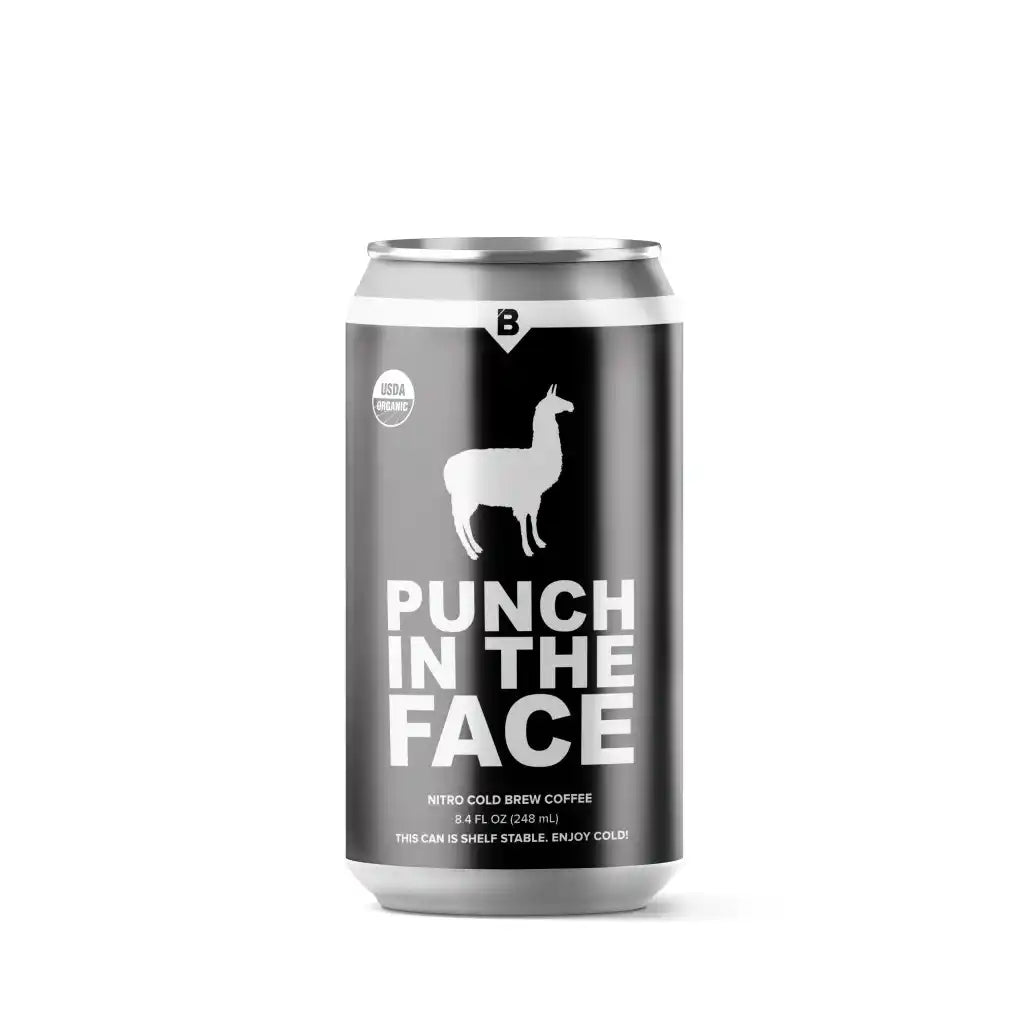
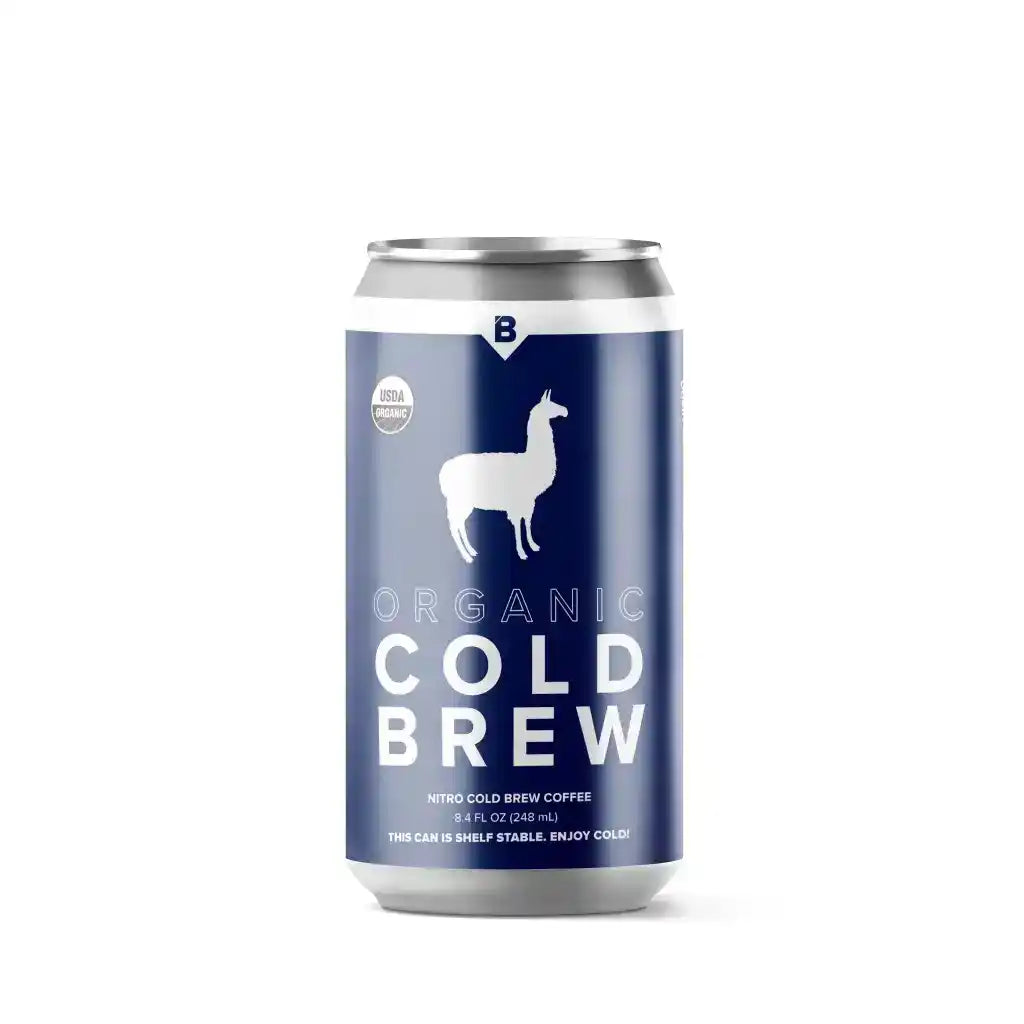
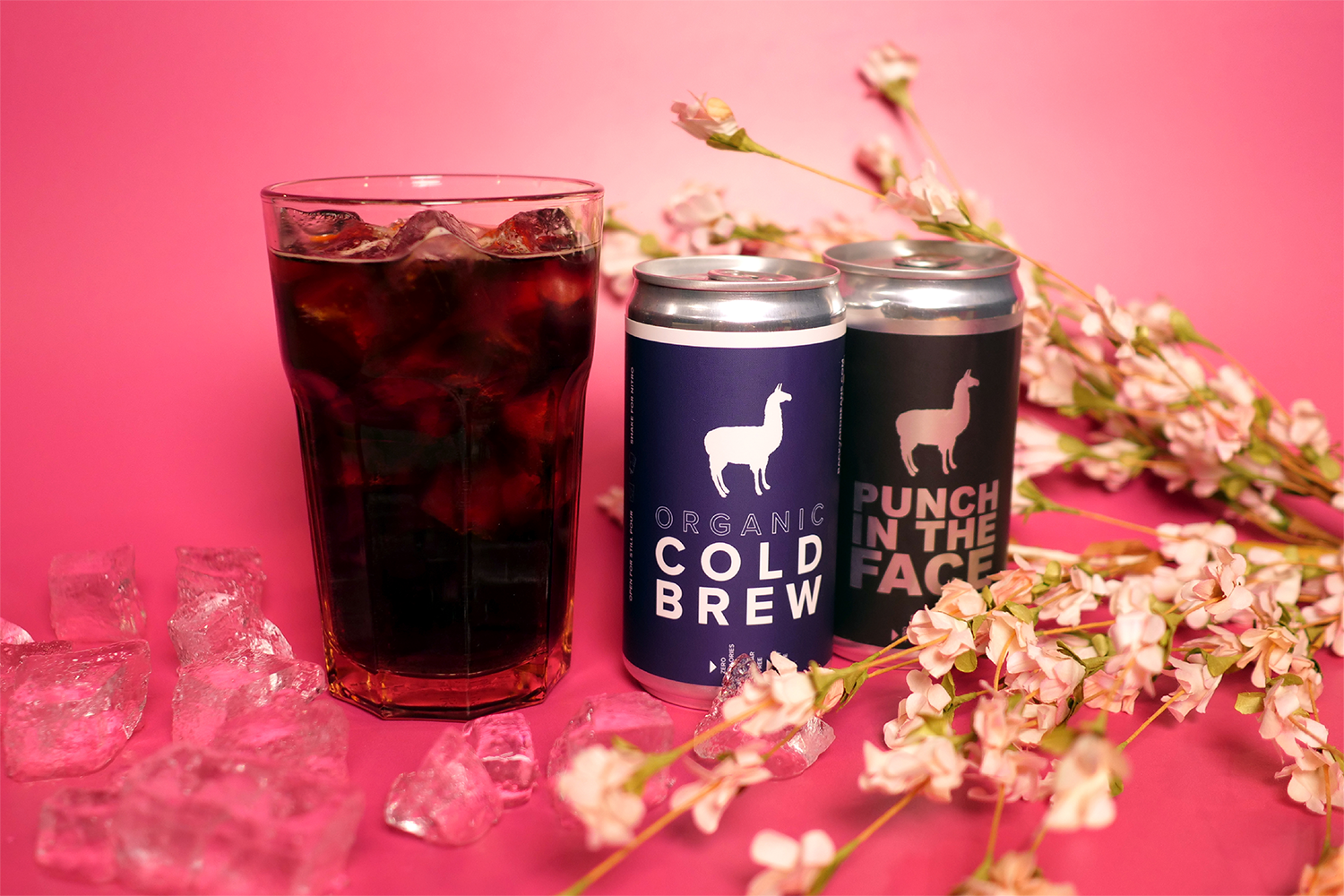
We have our Punch in the Face 8.4oz 4pk, and our Organic Medium Roast 8.4oz 4pk!
Why are the cans different sizes than your original cold brew cans?
A couple reasons. We wanted the cans to be easily identifiable and visibly different from our standard refrigerated cans.
Where will the shelf stable cans be available?
They are available to order on our website right now! We may explore offering these cans to retailers as well in the near future.
Do you plan to launch any other coffees as shelf stable? What can I look forward to?
Yes! We would like to launch seasonal offerings as well as unique single origins or processing methods.
We hope you are as excited as we are for our launch of shelf stable cold brew. It has been a years long journey to get to this point and we are thrilled to see the finish line and be able to share the hard work with all of our cold brew fans. We have a lot more plans in the works to make some fun and exciting coffees into funky new cold brews that no one has seen before. This is only the beginning!


Leave a comment
This site is protected by hCaptcha and the hCaptcha Privacy Policy and Terms of Service apply.