

Coffee with a Cause: Introducing Our New Benefit Roast for Anaweza
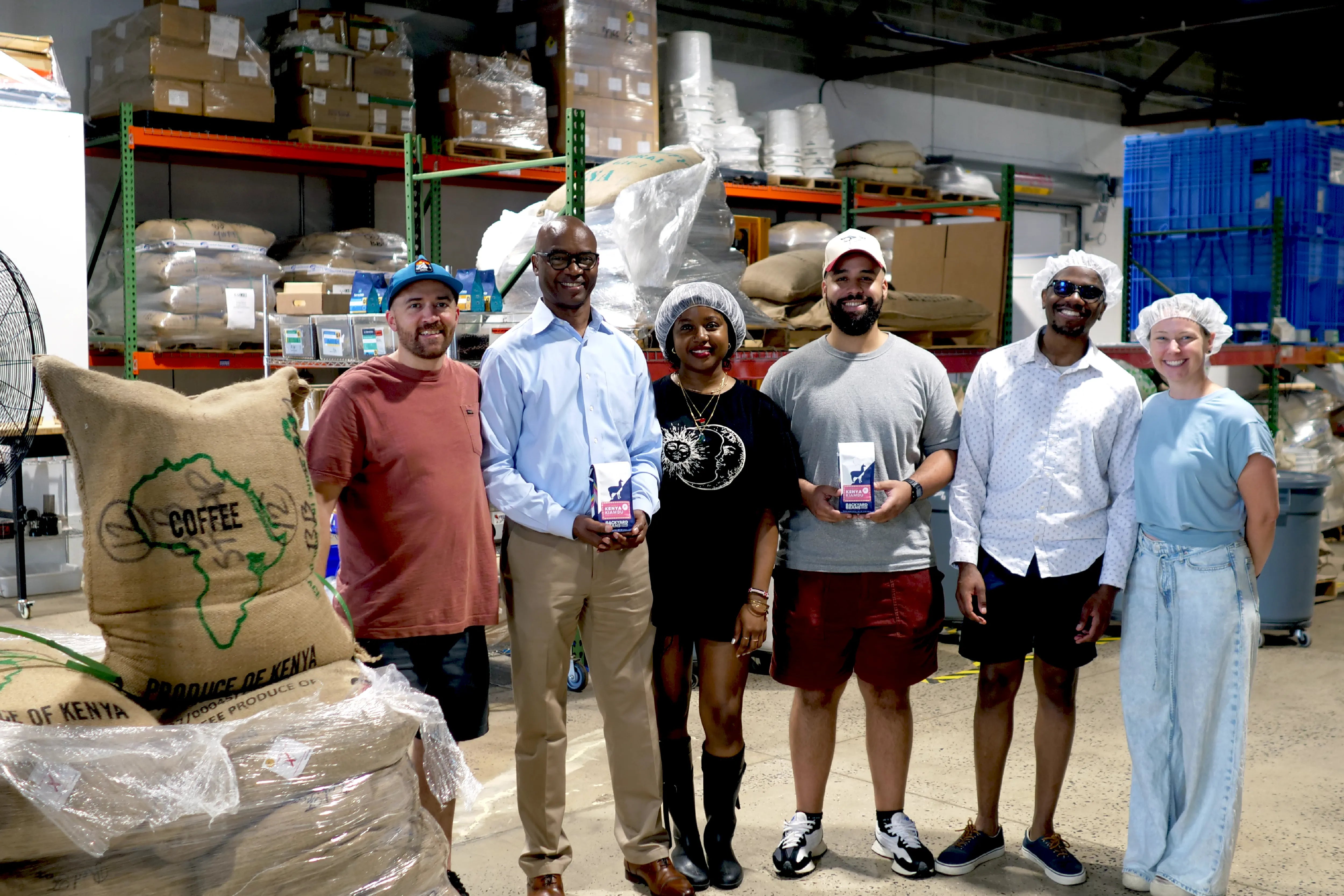
At Backyard Beans, we love using great coffee to support incredible causes. That’s why we’re excited to announce our next benefit roast, supporting Anaweza: a children’s charity dedicated to providing quality education and a brighter future for orphaned and vulnerable children in Kenya. Education is one of the most powerful tools we have to break the cycle of poverty, and we’re proud to play a small part in that mission.
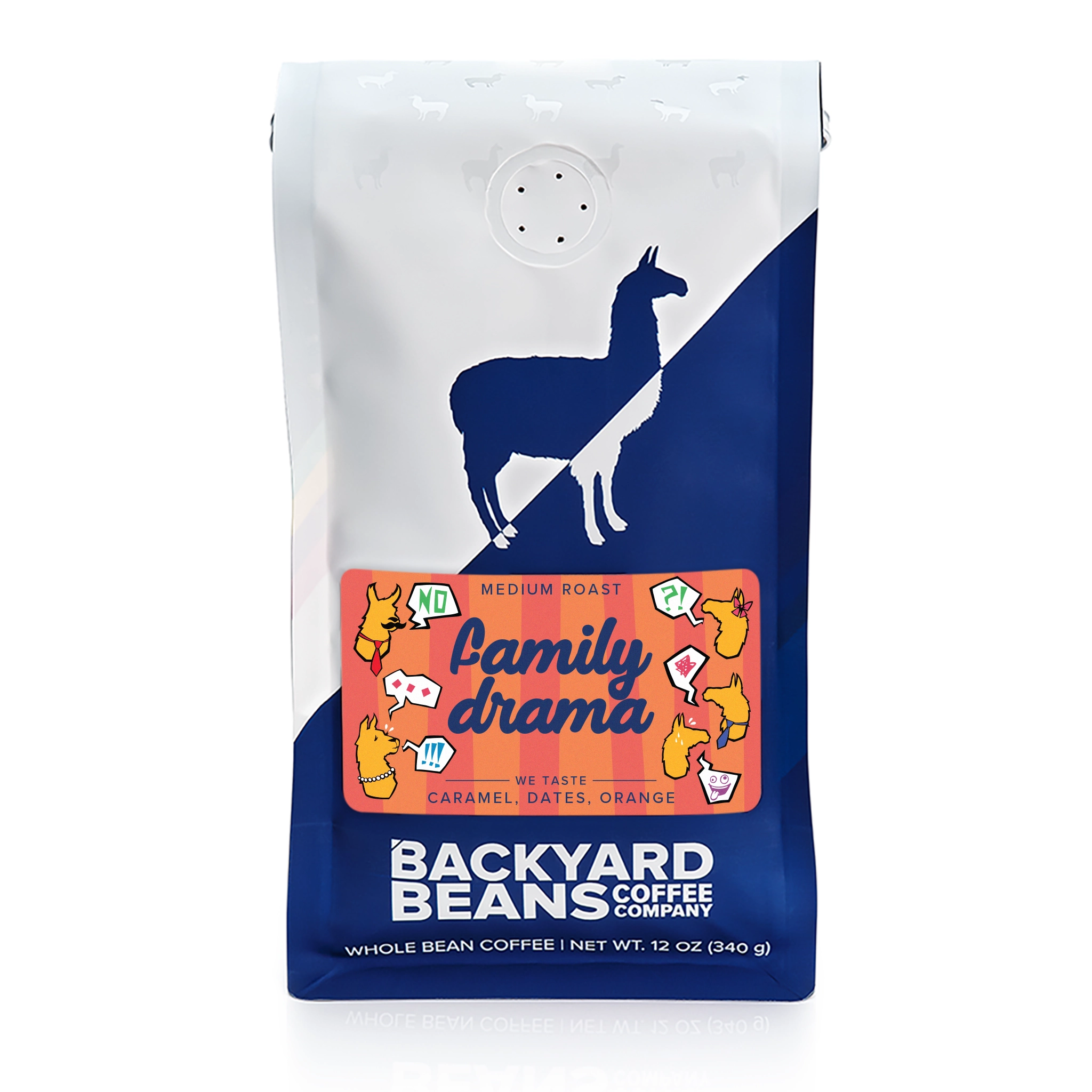
To help raise funds, we’re releasing an exclusive new roast for the month of July: Kenya Kiambu. For every 12 oz bag you buy, $5 goes directly to the Anaweza Foundation. Want to see how your morning cup is making a real-world impact? Check out our Q&A below with Sandi Muli, Anaweza’s Director of Communications, to learn more about the incredible work they do.
Can you share the story behind how Anaweza was founded, and what that initial vision looks like in action today?

Anaweza Foundation began with a request our founder, quite honestly, was not prepared to take on. Rev. Dr. Alfred Muli (along with his 11 surviving siblings) grew up in relative poverty. Along with his parents being farmers, his mother was a leader at their local church and his father the head pastor. Due to great need, the church went on to open a small children's home in 1976; Alfred spent many years of his childhood visiting this home to play with the children who lived there. By 2017 its overseas sponsors had fallen away and the home that held his childhood memories was on the brink of closure. His hesitation to take over did not last long, he found himself thinking of the parable of the Good Samaritan (the men who passed by asked, “If I help, what will happen to me?” The Samaritan asked the opposite, “If I do not help, what will happen to him?”) he wondered, “if I do not help those children, what will happen to them?” The answer was obvious; he shared this with his wife, they spoke with their children and the decision was made.
What he brought to it was personal. He grew up on a humble coffee farm, and it was the earnings from said farm that paid for the education that changed his life, so he knows firsthand that education is what lifts a child out of poverty. That is where the vision for Anaweza was born. We are so proud to say that today, it looks less like an institution and more like a family: rather than housing our children in an orphanage, we support each child to grow up with kin and community while we support their schooling from the early years through college. The goal is not to care for a child for a season, but to raise a self-sufficient adult who will then help guide the next Generation behind them.
Anaweza emphasizes a community-oriented approach, focusing on raising children with guardians of kinship rather than in traditional orphanages. Why is this model so vital to a child's long-term success?

We believe children thrive when raised within familial and community structure, not institutions. Kenya is a deeply communal society, where extended families and neighbors naturally surround a child, and our model works within that grain: wherever possible an Anaweza child grows up with a relative or guardian who loves them, while we remove the financial barrier that would otherwise pull them out of school.
Our foundation implemented this practice six years ago and we are so glad to see that Kenya will be implementing this throughout the country. Kenya’s "Care Reform Strategy" now ranks family and kinship care above residential institutions, reflecting what decades of research show; a child who grows up belonging to a family forms healthier attachments and a stronger sense of identity than one raised in an institution (no matter how well-run they might be).
Furthermore, Nancy Muli (a memory care and continued care specialist, a board member, and the founder's wife) has pressed us from the start to guard the children's psychological health, not just their physical needs, and we employ a social worker in Kenya who visits each child at school and at home to make sure they are genuinely thriving. It costs more than simply maintaining an orphanage, and we are at peace with that, because it is what actually gives a child a holistically healthy upbringing.
Your mission states that education is the key to a brighter future and fighting poverty. What are some of the biggest obstacles these vulnerable children face in accessing quality education, and how is Anaweza helping them overcome them?
In Kenya, much of primary (elementary) school is officially free, but it is never free to the family. The government covers core tuition, yet parents still have to find money for food, uniforms, books, exam fees, transportation, and, as a child grows older, boarding; the scale is easy to underestimate. More than four in ten people in rural Kenya live in poverty, many on less than $50 USD per month, while a single year of secondary (high school) boarding can cost a family upwards of $500 USD. One child's school fees for one year can easily consume the entire annual income of a poor rural family; this in turn causes capable children to get held back, not for lack of will but for lack of means.
Anaweza exists to erase that circumstance. We take on those costs so a family never has to choose, freeing the child to focus on the one thing that will give them a chance of a better life: their education. Our founder lived this himself, from relative poverty and his parents spending every cent they made to educate their many children, it rewrote his future, and we are simply giving the children in our care that same chance.
One of your core principles is "Eternal Focus" – seeking to make a lasting impact on a child's life for eternity. What does that principle look like in action on a day-to-day basis?

Eternal Focus is, at its root, a statement of faith: we want to make a difference in a child's life that outlasts us and even them. But day to day it is intensely practical. We are not only trying to take care of children, but we are also trying to raise leaders; children who finish their education, find good work, stand on their own, and then eventually mentor and uplift the younger generations in their families, their communities, and the next generation of Anaweza scholars we take on.
Poverty is a cycle that grinds families down generation after generation. We are trying to turn that same wheel in the opposite direction, into a cycle of development and upliftment. Poverty compounds, but so does opportunity! Every child we raise into a capable, generous adult makes life better for everyone they go on to reach. Most importantly, it creates a path to breaking generational poverty, which is an impact that outlasts.
When you look at the children and families you support, is there a specific success story or moment that perfectly captures why you do this work?
Her name is Christine Musembi. She was born into a home of absolute poverty, her father has never been in the picture, and her mother does any form of manual labor she can find to feed Christine and her three siblings. In her own words, “Before joining Anaweza there were many times we'd go without food and other basic needs.” What hardship never touched was her mind and determined spirit; there was never a moment of free time that Christine was not found with her nose in a book or educational journal. From a young age, she was asking questions that were beyond her years; she was and still is a consistent well of curiosity. She recently took the Kenya Certificate of Secondary Education, the national exam that largely decides which university and majors a student can pursue. Not only did she earn an A, the top grade of the system awards, she was placed among the country's strongest candidates. She is such a joy to witness, her passion for learning and helping those around her is an inspiration to everyone who meets her. We shudder to think what would have happened to Christine if we did not find our way to her; we are glad we will never have to find out.
Her ultimate dream is to become a neurosurgeon and to spend her life saving others. Anaweza intends to walk that entire road with her. We will not stop until Christine has every bit of the education she needs to reach her future, and what we promise her, we promise every child in our care.
Running a 501(c)(3) nonprofit that operates internationally requires a lot of moving parts. What is a challenge your team faces behind the scenes that supporters might not fully realize?

The hardest part is not what most people would guess; it is the challenge of running an efficient and effective organization in a country across the ocean from where you live. Some of it is logistical, there is about a seven-hour time difference between Kenya and the United States, so even quick decisions carry a built-in delay. But the deeper challenge is cultural.
Our entire staff is made up of volunteers, many of us are Kenyans but we have lived in America for nearly 25 years, and Kenya has not stood still while we were away. With frequent visits to Kenya and the support from our Manager and Social Worker who are based in Kenya, we work hard to make informed decisions based on what Kenyan children actually need today, in the context of their culture and their present reality. Staying humble about that gap, and listening closely to our team on the ground, is a constant and vital discipline.
How do you see the relationship between global supporters (like those reading this blog) and the local communities in Kenya? What is the most meaningful way for an outsider to stand in solidarity with Anaweza?
Financial support matters, because every dollar of school fees has to come from somewhere, but we would never want a supporter to hear “just send money”. The deepest solidarity is to commit for the long haul: we do not sponsor a child for a year and then walk away, we support them from their early schooling years all the way through to careers in their adulthood; we are talking a span of over a decade, and someone who comes alongside one child for that whole journey through a steady monthly gift is not making a donation so much as joining a family and making an eternal difference in that child's life.
Other ways of supporting us that matter greatly are: sharing our foundations story with your friends and families, passing our information along to people you may know who would be interested in becoming sponsors or partners, and supporting the partners who support us (purchasing a bag of Backyard Beans coffee from this collaboration is a perfect example of the latter). Above all, stand with us as a supporter/partner rather than a rescuer; the best help follows the lead of the people who know and love these children on the ground, and that humility is the finest thing our global supporters can offer.
Looking ahead to the next few years, what is the next major milestone Anaweza is working toward to deepen its impact?

Our next big milestone is a graduation on a scale we have never seen. When Anaweza began at the end of 2017, we took on a large group of children all at once out of urgent necessity; this meant that they have moved through school together as one massive cohort rather than the staggered structure we will be moving forward with for our future cohort of scholars. Our current group is now cresting, many are in college, and a good number of them are close to finishing, and our immediate focus is getting every one of them across the finish line, hard earned degrees in hand and into the work force.
That moment opens up yet another new (exciting) chapter for our organization. Once this first generation of our scholars are standing on their own, we can roll out the red carpet and welcome the next generation; supported with the help of the wonderful young adults this program produced, under a structure built to last. Watching the first group of wide-eyed children (now blossoming young adults) we ever took in turn around and lift the next generation is a bright future we are very much looking forward to.


1 comment
Great interview!!! Wonderful to read all that ANAWEZA is doing! So exciting. Thanks to Backyard Beans for helping to support the Muli family & their mission. Such a blessing!
Chrissy Kind
Leave a comment
This site is protected by hCaptcha and the hCaptcha Privacy Policy and Terms of Service apply.